

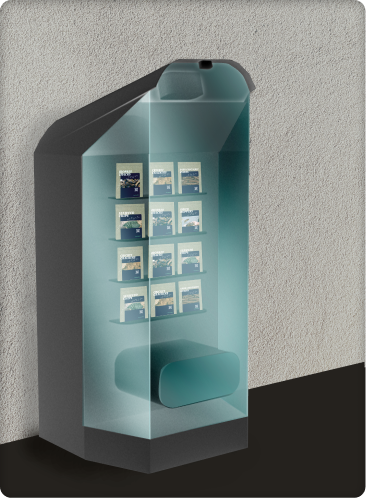
The touchpoint is a stand-alone machine with an touch screen to interact with the users and the ability of food dispensation.
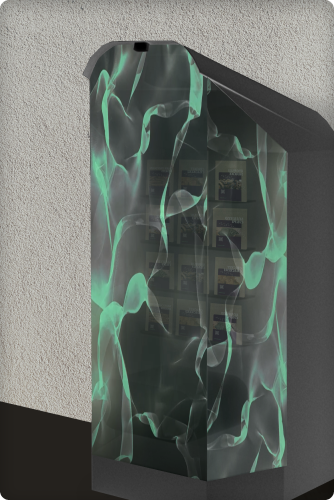
In "Passive Mode", the touchpoint plays moving graphics to attract pedestrains walking by.
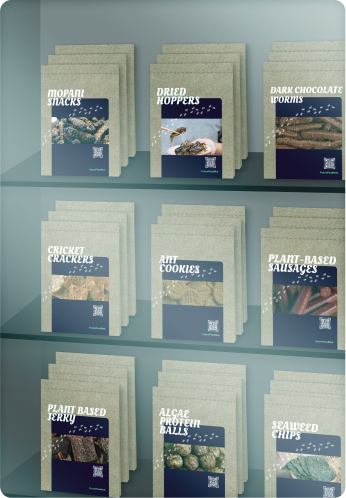
In the touchpoint, various future food snacks are provided. The algorithm designed would suggest the most suitable food for the new users to try.
Main Users
People who live and mobilitate in the urban environment
Stakeholders
Institutions such as universities and public meeting places, office complexes, daily store companies and/or infrastructional hotspots.
Problem
People today do not have access to these types of foods today, and are often opposed to the idea of eating these types of foods.
Solution
Physical touchpoints around the city to get people to learn about the positive effects of these types of food, and to nudge them into trying out a snack by analysing their emotions towards the topic
Hotspots in the city that offer effortless access to alternative food in an interesting and creative way. This is to introduce people to alternative types of food, especially protein rich food like plant-based meat substitutes, algae, and insects. These types of foods are what scientists and policymakers recommends us to implement in our diets to have a more sustainable way of producing and consuming food in the future.
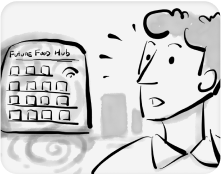
1. Sense of wonder.
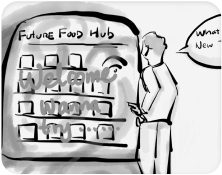
2. Approach and then it activates.
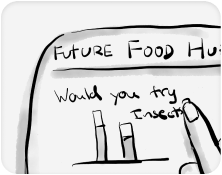
3. Learn more, and engage by interacting.
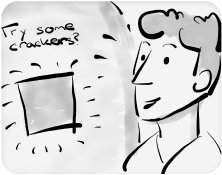
4. Get product recommended tailored to your reaction
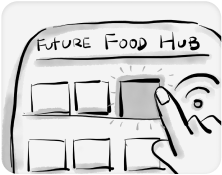
5. Or select an other alternitive
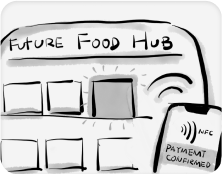
6. Purchase consciously.
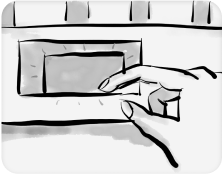
7. Pick up the snack.
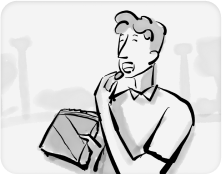
8. Discovering something out of your comfort zone!
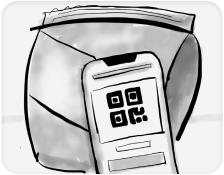
9. Get futher insights
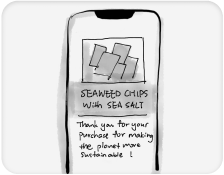
10. Continue the journey through the digital platform
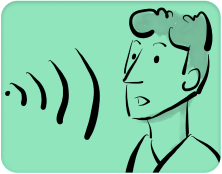
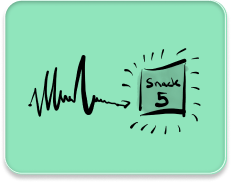
Detecting emotions while user interacts
The emotion detections validity
People not wanting to engage when first encountering
The operation of the hubs, maintenance, and its robustness needs to be addressed.
Overall emotional feedback of the concept
Validation phase: Test user engagement and the stability of the emotion detection. The validity of the different emotional flows by A/B testing.
Lo-fidelity prototype: More tailored emotional response to each individual.
High-fidelity prototype: The soulution in 1 : 1 scale. Can it retain its users?
The user engagement and the retention rate.
Results from A/B testing.
User observations and interviews.
